
How a morning walk at Janet DeNeefe’s Ubud Food Festival turned into a lesson in food, fermentation and cultural connection.
Bali: where culture and cuisine go hand in hand
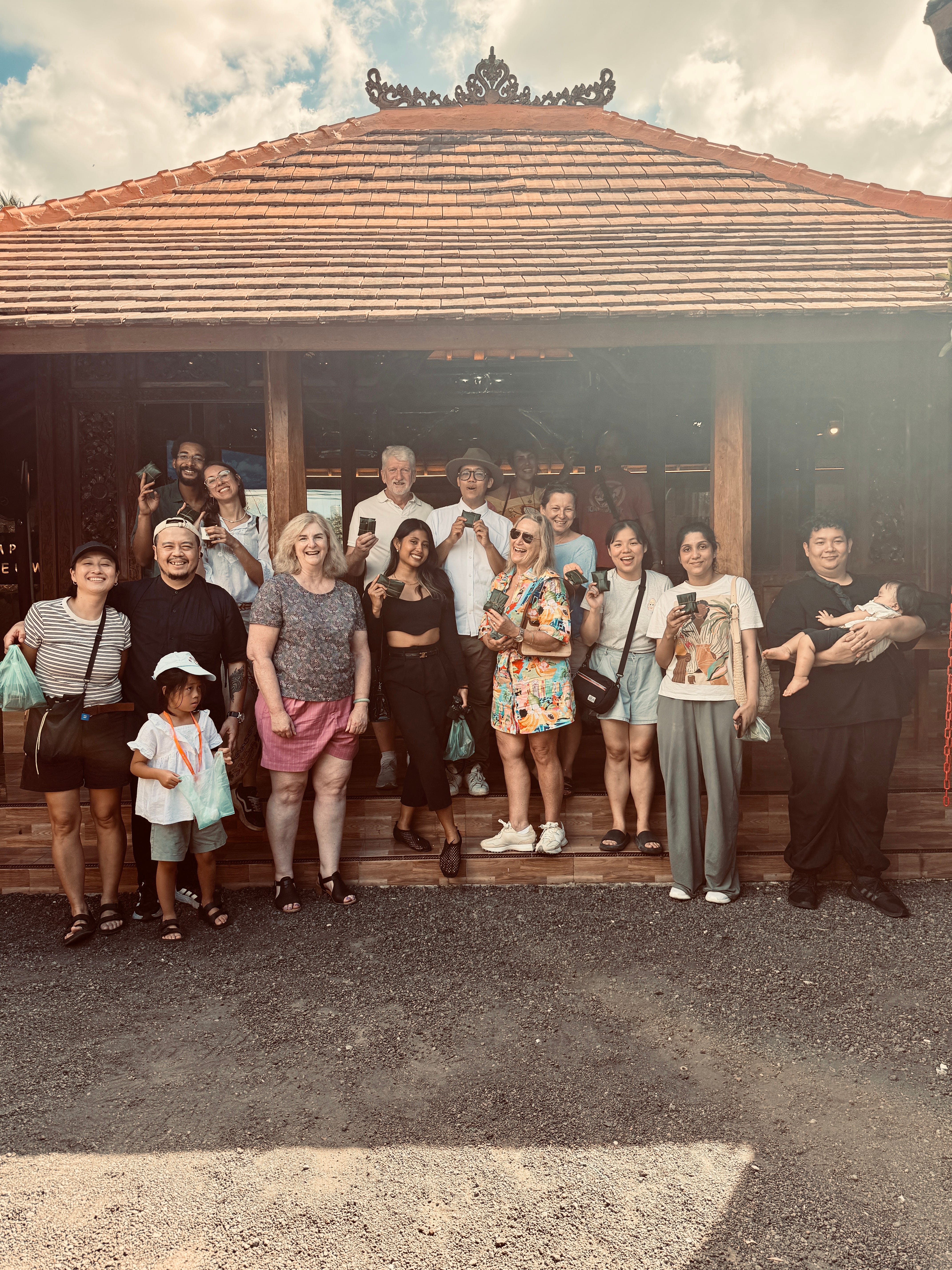
Look, kids… I made tempe!
At this year’s Ubud Food Festival, instead of searching for temples, I somehow ended up making tempe.
A few hours later, I was proudly clutching my homemade fermented soybeans as if I’d just completed a spiritual pilgrimage.
Honestly, it felt a little bit like enlightenment.
One of the highlights of my visit was the Ubud Gastronomy Morning Walk, part of the extraordinary festival created by Australian-born Bali icon Janet DeNeefe, whose vision has helped shine a global spotlight on Indonesia’s rich culinary heritage for more than a decade.
Our morning took us far beyond the tourist trail and deep into the ingredients that define everyday Balinese life.
And that’s where I discovered Tempego.
From temple to tempe
This wasn’t simply a food tour. We wandered through a local Ubud neighbourhood where daily life quietly unfolded around us – passing family compounds, home kitchens and morning rituals that have remained unchanged for generations.
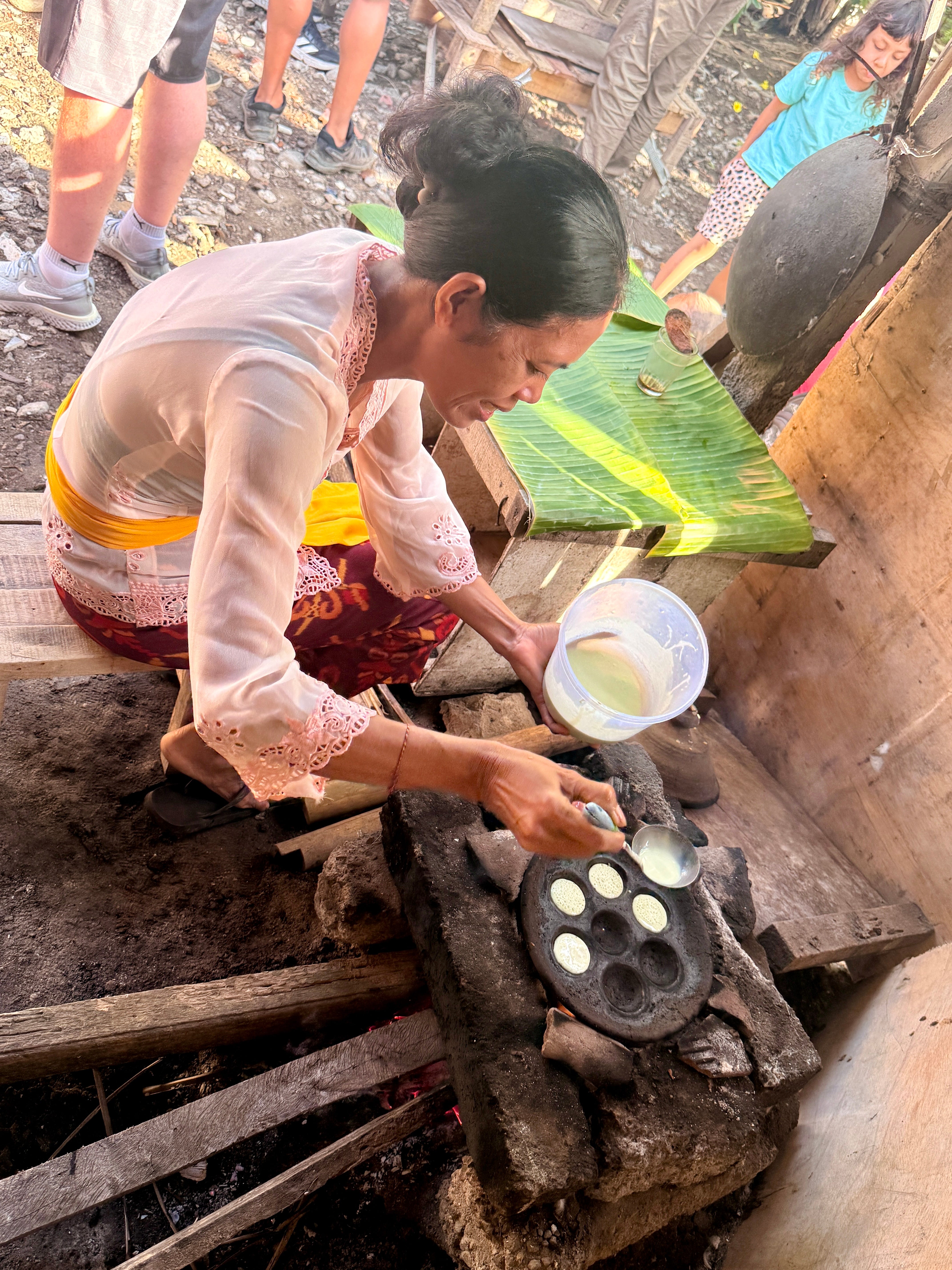
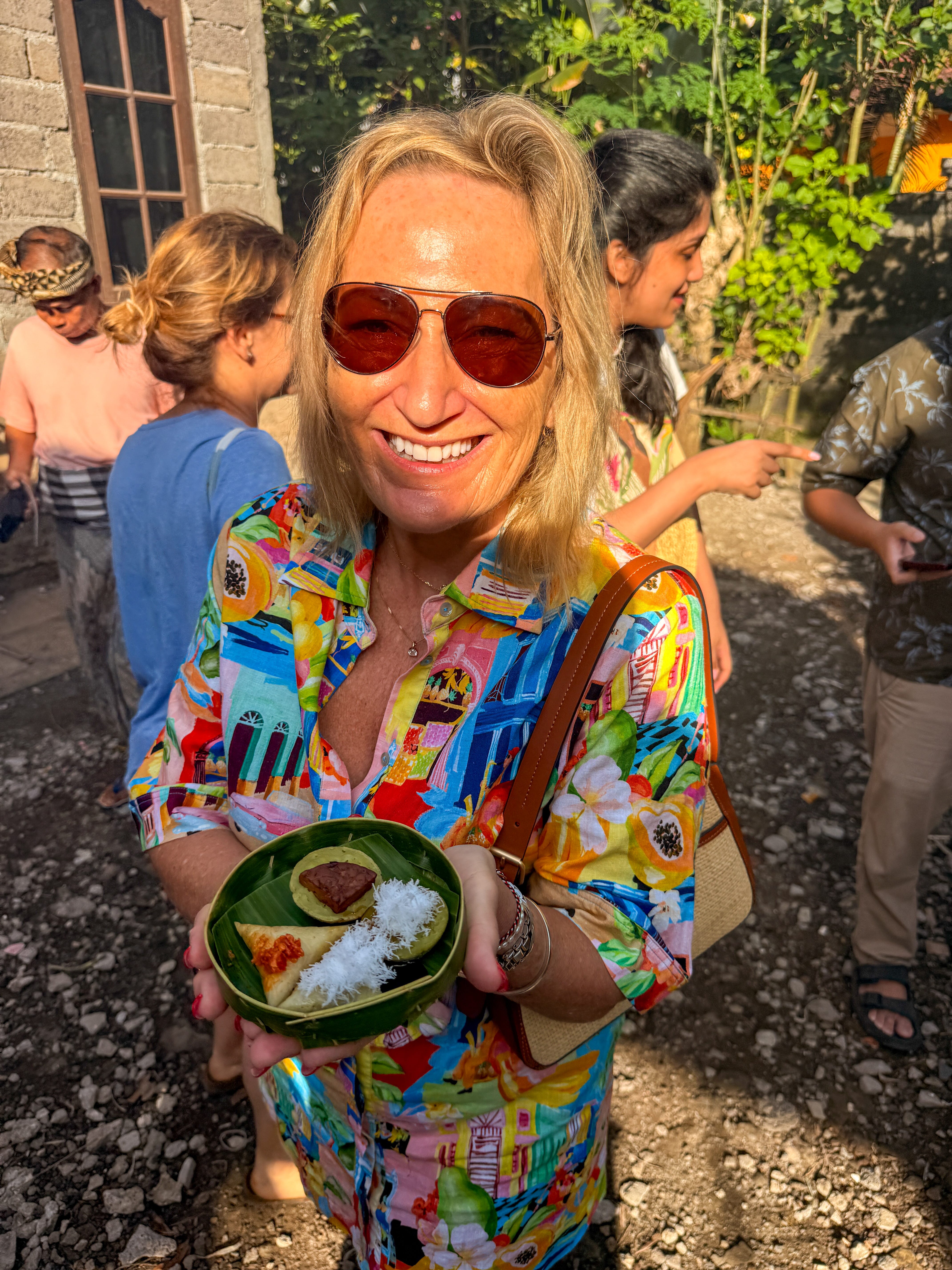
Along the way, we tasted traditional jajan pasar (market snacks) favourites such as laklak (below- traditional Balinese gluten-free rice flour pancakes) and lupis, reimagined with smoked tempe and gula juruh from Tejakula, before enjoying tipat cantok suna cekuh, a vibrant Balinese rice cake and vegetable dish with a punchy garlic, ginger and peanut dressing.
Learning the art of traditional tempe making
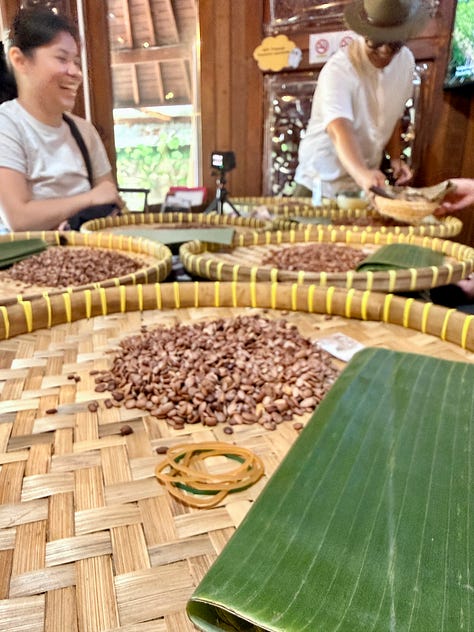
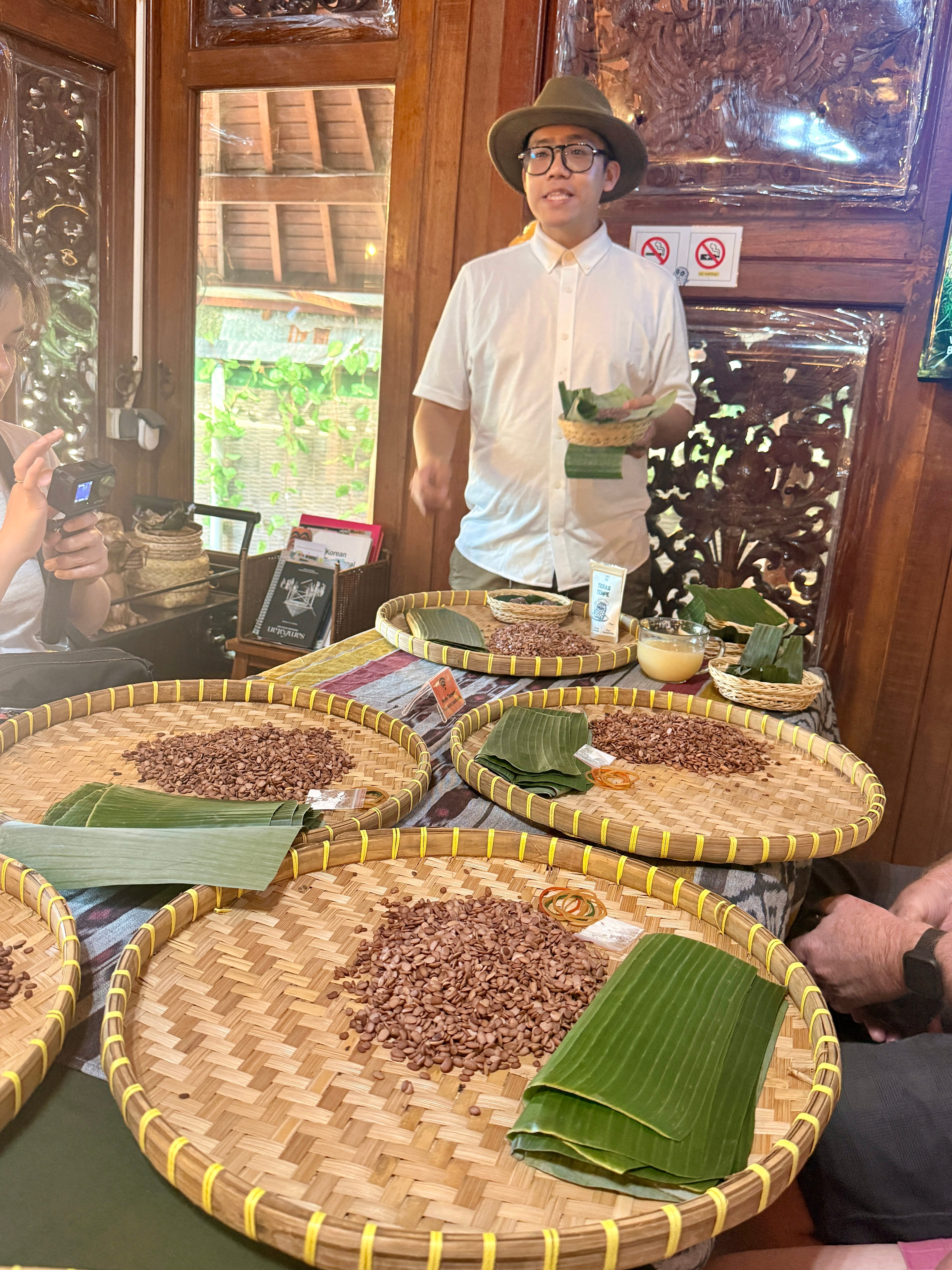
The experience culminated at Tempego, where we explored one of Indonesia’s most iconic foods through a hands-on black soybean tempe-making workshop and a visit to the tempe museum, finishing with a playful dessert of coconut ice cream and chocolate tempe – a modern twist on tradition.
This was a celebration of Indonesia’s beloved tempe, combining storytelling, sustainability, local farming and hands-on learning, all wrapped up in one deliciously immersive experience.
Who knew enlightenment could come wrapped in banana leaves?
Tempe: Indonesia’s original plant protein
For those unfamiliar, tempe is one of Indonesia’s greatest culinary gifts to the world. Made by fermenting soybeans into a firm, protein-rich cake, it’s packed with flavour, texture and nutritional goodness.
As both a chef and clinical nutritionist, I love foods that sit at the intersection of culture, flavour and science. Tempe ticks every box.
How is tempe made?
Tempe is made through a natural fermentation process that transforms cooked soybeans into a firm, sliceable cake. After the soybeans are soaked, cooked and lightly acidified, they are inoculated with a starter culture containing the beneficial fungus Rhizopus oligosporus.
Over the next 24–48 hours, the fungus grows into a fine white network of mycelium, binding the beans together into a single, compact block. This fermentation not only gives tempe its distinctive nutty flavour and satisfying texture, but also improves digestibility by breaking down complex compounds and reducing naturally occurring antinutrients, making many of its nutrients more readily available.

Why fermentation makes tempe so special
Fermentation has fascinated me for years. Across cultures, these ancient techniques weren’t created because they were trendy, but because they preserved food, enhanced flavour and nourished communities for generations.
Standing there, learning from local experts and carefully wrapping soybeans in banana leaves, reminded me that some of our greatest food lessons don’t come from cookbooks. They come from communities that have quietly perfected these traditions over centuries.
Bali has a way of teaching you that.
What Bali taught me about food and culture
We often travel searching for iconic landmarks, but the most memorable experiences are usually edible.
One minute you’re admiring a temple.
The next, you’re elbow-deep in soybeans.
And somehow, both experiences feel equally sacred.
Perhaps that’s the true magic of food tourism. It connects us to people, place and tradition in a way few other experiences can.
From temple to tempe, Bali continues to remind me that food is never just food.
It’s history.
It’s culture.
It’s connection.
And occasionally, it’s a very tasty life lesson wrapped in banana leaves.

My favourite tempe recipes
Of course, I couldn’t come home without thinking about all the ways to cook with tempe. This humble ingredient has long held a place in my kitchen and, over the years, I’ve created several nourishing recipes that celebrate its versatility, flavour and nutritional benefits.
If you’d like to bring a little Indonesian inspiration into your own kitchen, explore my collection of tempe recipes here:

Have you ever made tempe?
Have you ever made tempe from scratch? Or has a travel experience ever changed the way you think about food? I’d love to hear your stories in the comments.
Warm regards,
Sam
Backed by Science, Led by Experience.

You must be logged in to post a comment.