
My father, Dennis Gowing, became known to generations of Australians as Kevin Dennis — the flamboyant car salesman, restaurateur, businessman, art collector, racehorse owner and larger-than-life character.
To me, he was my dad.
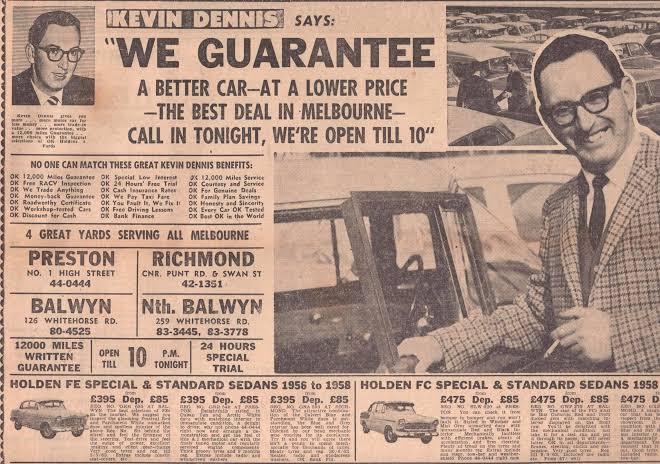
From Dennis Gowing to Kevin Dennis
In 1960, my dad went into partnership with Kevin Heffernan, who operated a second-hand car lot in East Hawthorn. Together they combined their first names to create Kevin Dennis O.K. Motors Pty Ltd.
The partnership was short-lived. Within a few months, my dad became the sole owner, but the name remained.
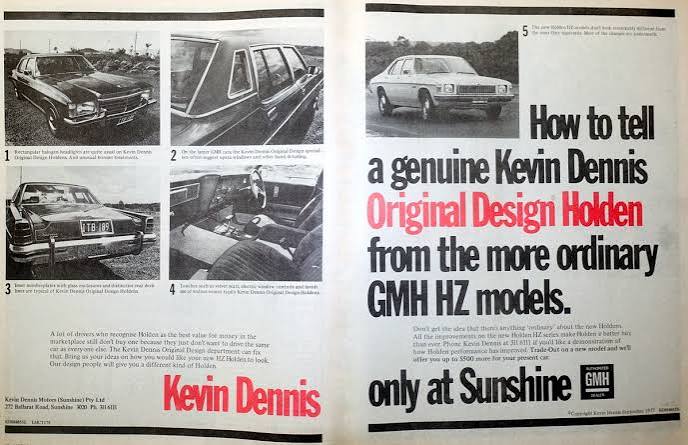
By 1963, Kevin Dennis was not only a car-yard name but a television personality, appearing on Channel 9’s Kevin Dennis Auditions, later Kevin Dennis New Faces. He went on to appear on other sponsored television programs, including Tell the Truth and Kevin Dennis Sports Parade.
The name Kevin Dennis became a brand — and, eventually, a persona that was almost as famous as the man himself.
He had come a long way from his arrival in Australia on 10 May 1949 aboard the Georgic, as a Ten Pound Pom. An orphan with very little to his name, he arrived in Australia with plenty of ambition and a determination to make something of himself.
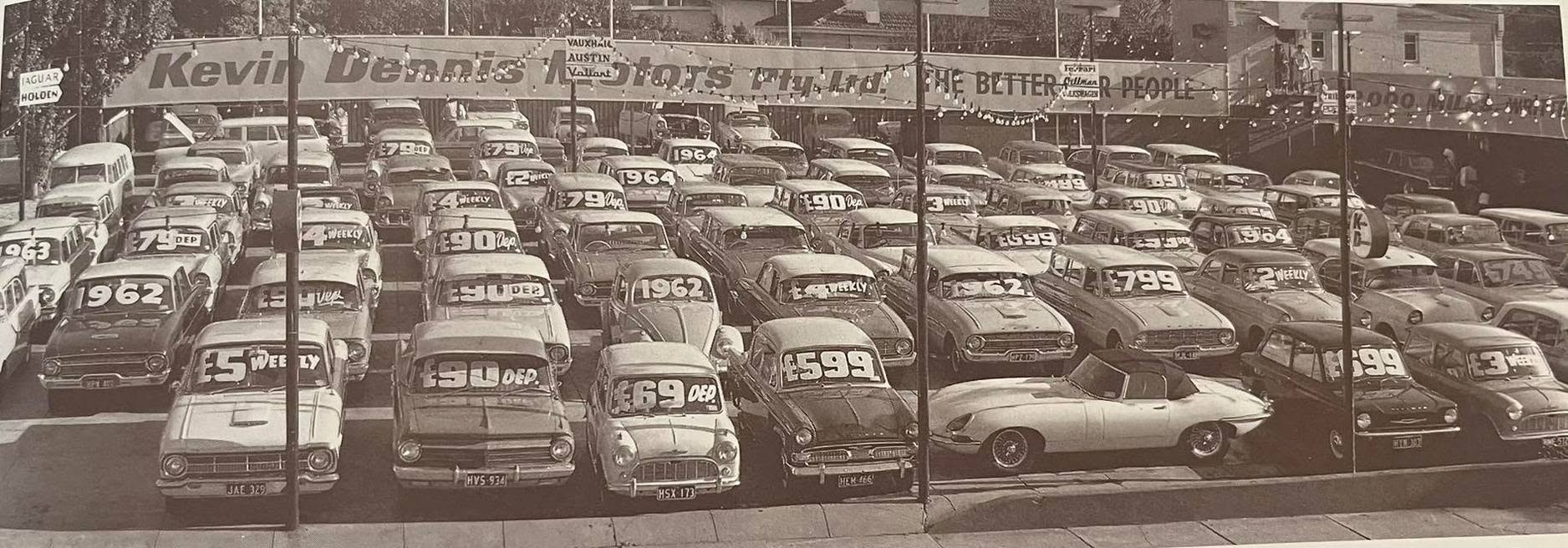
KD & TV
Dad understood television very early. Australian television was only in its infancy when he began using it to build the Kevin Dennis name, and he quickly realised that television could do something a newspaper advertisement couldn’t — it could put a personality into people’s living rooms.
In 1963, he sponsored and regularly appeared on Kevin Dennis Auditions, a Saturday morning talent program on Channel 9 in Melbourne. The program later became Kevin Dennis New Faces and then New Faces, eventually becoming a popular prime-time Sunday night program.
It wasn’t simply a case of putting the Kevin Dennis name on a program. He was part of the show. He was comfortable in front of the cameras and understood that people connected with personalities as much as they connected with products.
New Faces went on to become an important part of Australian television history, with contestants including Olivia Newton-John, Paul Hogan, Johnny Farnham, Daryl Somers, John Williamson, Keith Urban and Julia Morris, among many others who went on to successful careers in Australian entertainment.
He was also involved in football television with Kevin Dennis Sports Parade, another sponsored program that became part of his growing television presence. The Australian Dictionary of Biography records his appearances on the program alongside Tell the Truth.
And then there were the television commercials.
He didn’t just sell cars.
He created a show around them.
Looking back, I think that was one of his great talents. He understood that people remembered a personality. They remembered a face, a voice, a bit of cheek and someone who made them smile. His familiar face became part of the Kevin Dennis brand across newspaper advertising, television commercials and the banners around his car yards.
Long before anyone talked about personal branding, he had worked out how to make the Kevin Dennis name memorable.
That was him — part salesman, part entertainer and always ready for the next opportunity.
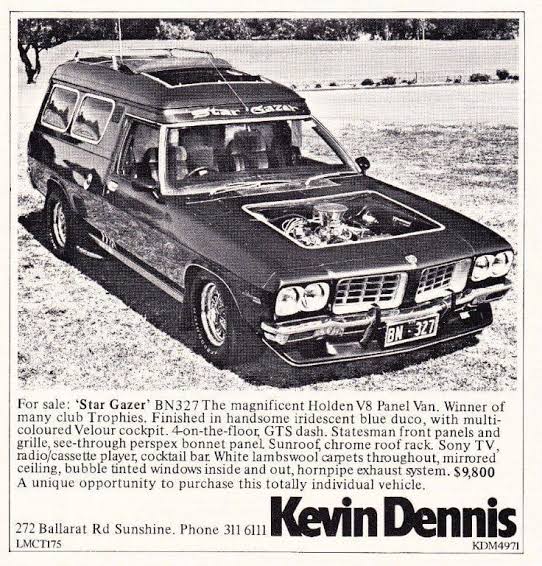
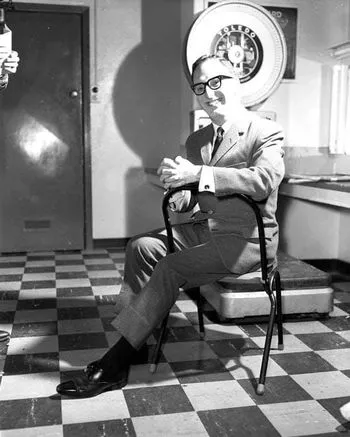
Dennis Gowing, appearing on the Australian television show Tell the Truth.
Beyond the car yard
Selling cars was only the beginning.
He went on to become a restaurateur, property developer, art collector and racehorse owner. He owned restaurants including Jackson’s of Toorak, The Londoner, Alfred Place, Melbourne, and Gowings Restaurant in East Melbourne, and later bought the Grace Darling Hotel.
He loved restaurants because he loved people.
He was a natural host with an incredible eye for detail and an instinctive understanding of what people wanted. He seemed to know exactly what each diner and each table needed, and he loved the theatre of a good restaurant — the food, the service, the atmosphere and, most importantly, the people.
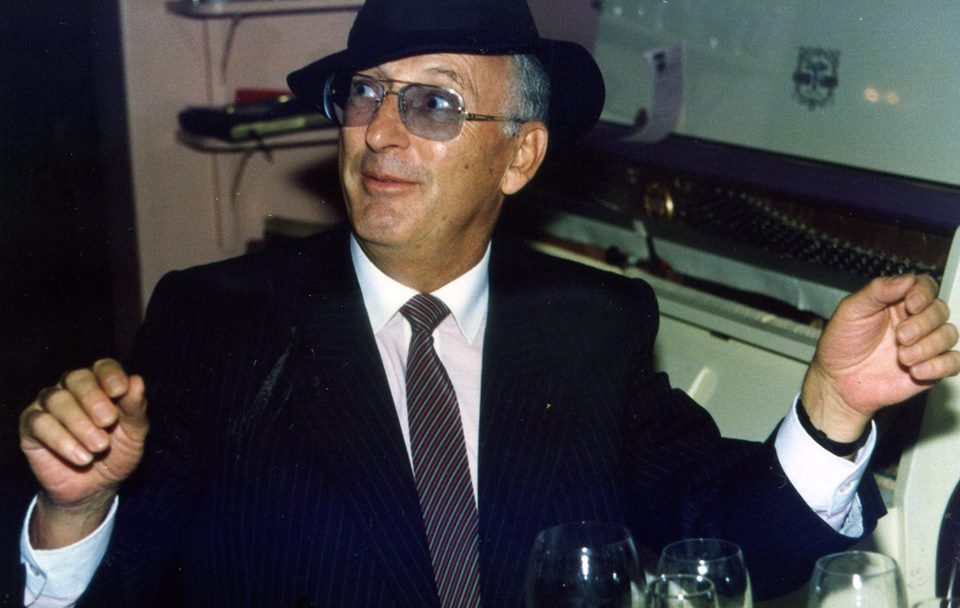
He loved good food, good wine, art, horses, beautiful things and good company. He also loved the theatre of business — buying, selling, negotiating and taking a punt.
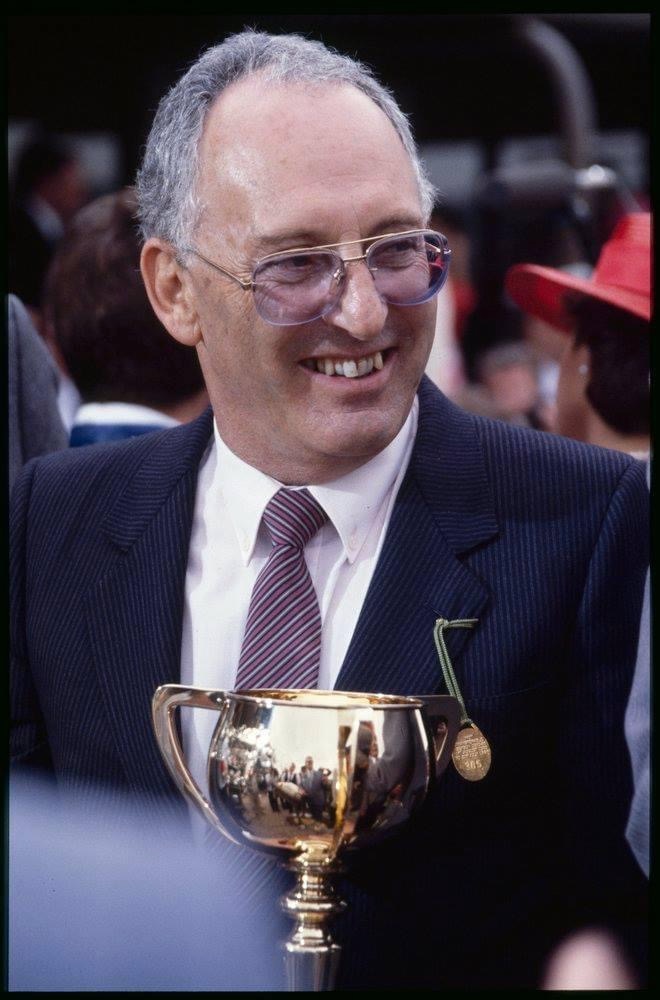
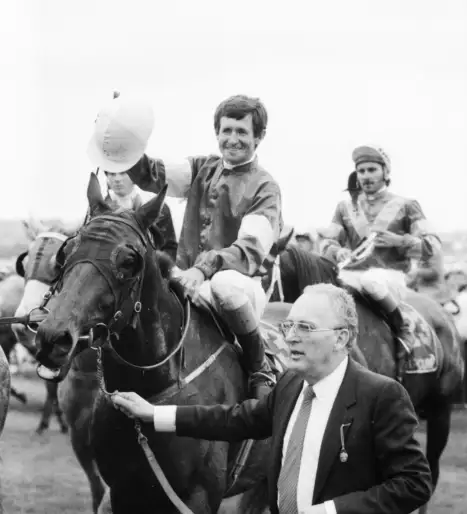
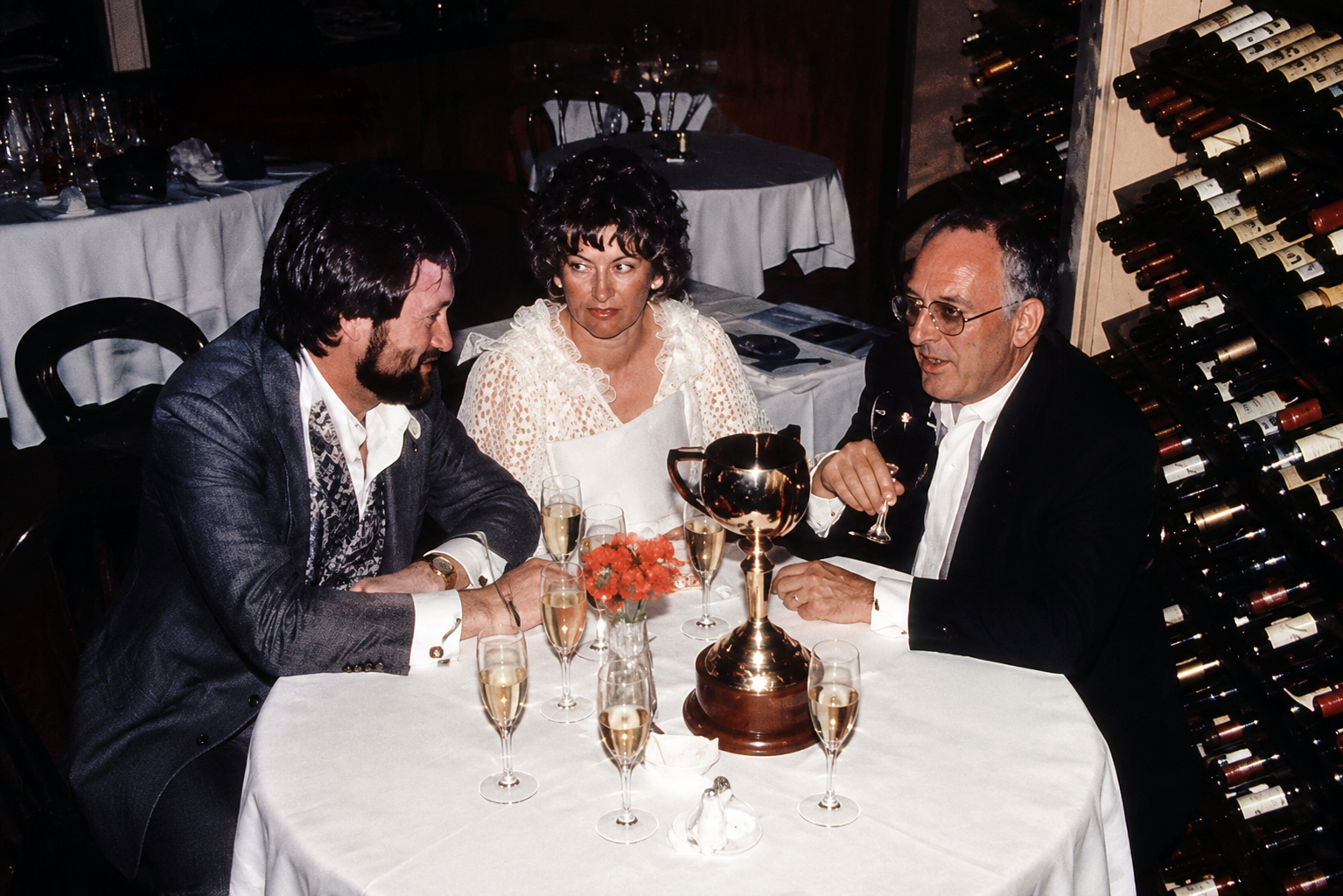
In 1985, he and Lloyd Williams were joint owners of the Melbourne Cup winner What a Nuisance. He had an eye for art, too, buying works by some of Australia’s great artists.
He was also, like most interesting people, complicated.
Friend and legendary food critic Rita Erlich’s obituary (see below) captures that beautifully. It describes a man who could be extraordinarily kind and generous, but also savage; charming and courteous, but sometimes offensive; wonderful company, but often black-tempered.
Learning the art of hospitality
My own journey in hospitality had already begun well before I joined my dad at Gowings Restaurant.
In 1984, I started at Gowings Hotel at Mount Macedon, and from there I went on to run Miniami Japanese Restaurant in South Yarra. I was finding my feet, learning the business and developing my own understanding of food and hospitality.
Then, in 1987, I was recruited to join the staff at Gowings Restaurant in East Melbourne. By then, he was already unwell with cancer, and I think that changed the experience for both of us. I was working with my father, but I was also watching a man who had always seemed larger than life dealing with his own mortality.
Gowings was a 2.5-hat fine-dining restaurant, and I quickly discovered that I was going to receive a very serious education in hospitality.
The front of house was made up of highly experienced professional waiters, maître d’s and senior service staff who really knew their craft. Among them were Robbie Gibson, who has since passed away, Nevio Bella and Peter Biondi. They were some of my greatest teachers.
Service was formal and precise, and there was a real discipline to it. You were expected to know your food and wine, read your guests and be one step ahead of what they needed.
And I was fiercely trained to see everything.
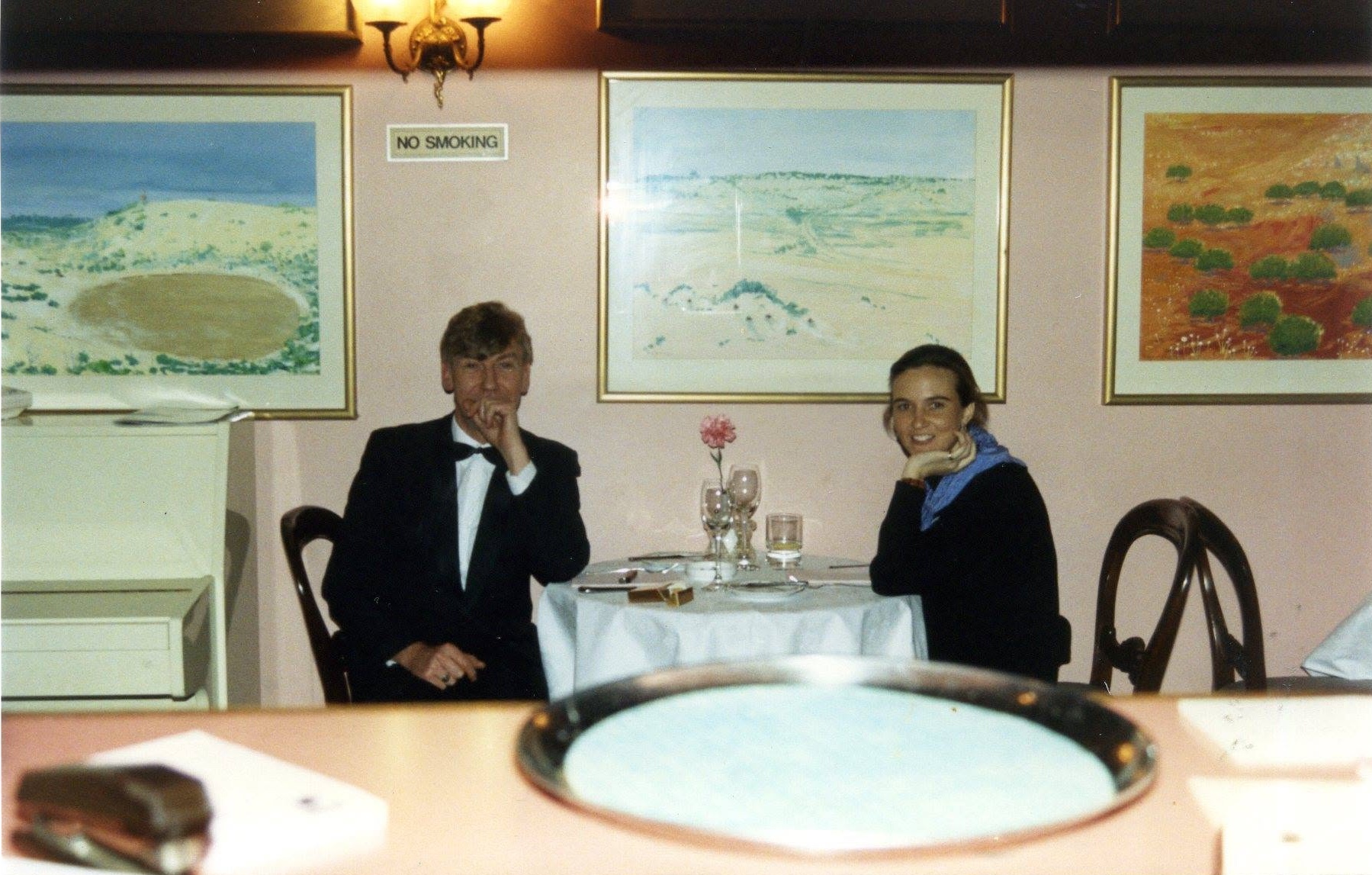
A painting hanging slightly crooked. A wobbly table. An ashtray that needed changing. A missing knife from a place setting. A glass that needed another polish. A table that wasn’t quite right. You were expected to notice these things before the guest did.
We greeted every guest at the door and watched the room constantly. You had to learn to read the table — who needed something, who was waiting, who had finished, who was celebrating and who perhaps wanted to be left alone for a little while.
There was a real craft to it. The waiters and maître d’s knew their trade, and I absorbed it by watching them, as well as being corrected — sometimes very quickly — when something wasn’t right.
Dennis noticed everything. Nothing in that restaurant escaped his attention. At the time, I probably thought he was being incredibly fussy.
Now I realise he was teaching me.
He taught me that hospitality isn’t just about the food. It’s about the room, the service, the timing, the welcome and all those little things that people may never consciously notice but absolutely feel.
Looking back, that training stayed with me. It became part of how I cook, how I teach and how I approach food and hospitality today.
And, perhaps unsurprisingly, I still notice the crooked picture from a mile off.
The obituary
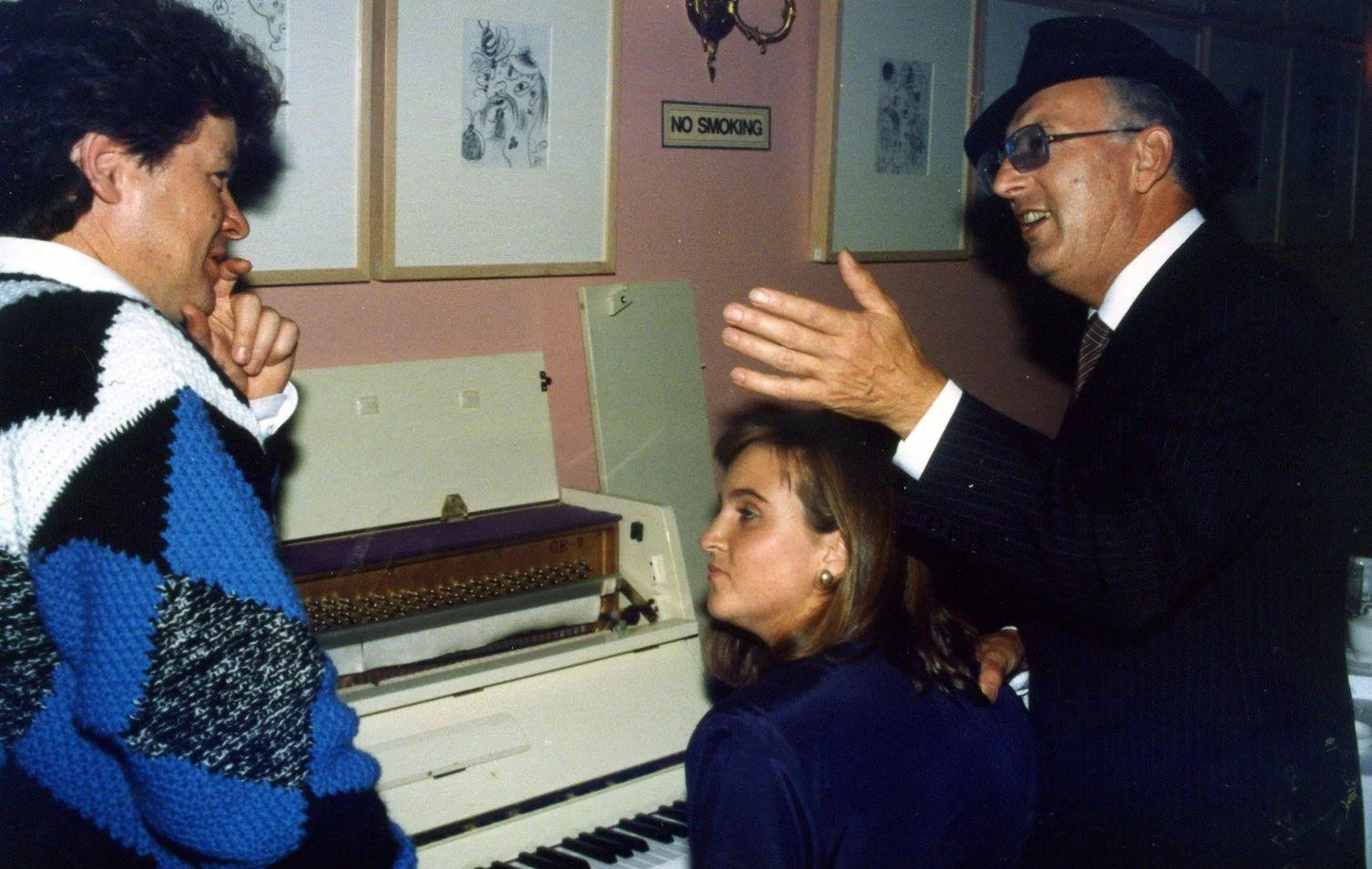
Shortly before my dad died, he invited Rita Erlich to lunch and, when she asked if there was anything she could do for him, he told her to “write a good obituary”.
Rita is a family friend as well as a former food critic and writer for The Age. She did exactly as he asked, and her account remains one of the most personal records of his amazing life.
She knew my father beyond the headlines. She knew the salesman, restaurateur, businessman and larger-than-life character, but she also knew the man behind all of that.
Her obituary was published in The Age on 4 December 1991 and is preserved today by the Australian National University’s Obituaries Australia.
Read Rita Erlich’s obituary of Dennis Gowing →
Rita Erlich, The Age, 4 December 1991. Preserved by Obituaries Australia, Australian National University.
The beginning of my own journey
In many ways, that loss became the catalyst for the life I went on to build.
I began to question health, illness, food and the way we live. What could we do differently? Could food play a role in helping people live better? Could cooking be both pleasurable and genuinely nourishing?
I had grown up around restaurants. I had watched people eat, celebrate, indulge and socialise around food, and I had always understood the pleasure and connection that food could bring. But after losing my dad, I also became much more curious about what food was doing inside the body and how the choices we make every day might affect our health.
Those questions stayed with me. What if food could be both delicious and nourishing? What if we didn’t have to choose between pleasure and health? What if cooking could actually become part of the solution?
That curiosity eventually led me into nutrition and wellness, and in 1999 I began my professional journey in the field. I went on to become a chef, clinical nutritionist and graduate of Le Cordon Bleu. I worked in restaurants, resorts and spas, taught cooking, developed recipes and spent years exploring the relationship between food and health.
What started with the loss of my father became a lifelong fascination with the way food, health and wellbeing are connected.
Today, my work centres around what I call Food as Medicine — not food as punishment, deprivation or some joyless version of healthy eating, but food that is joyful, deeply satisfying and genuinely pleasurable.
Looking back, I can see that my dad’s death was the catalyst. In some ways, my father’s death gave me the direction for the rest of my life.
The irony of it all
My dad, aka the ol’ boy, spent his life surrounded by food, restaurants, wine and hospitality, and yet his death was one of the things that ultimately led me to become so interested in health and nutrition.
He was also a very heavy smoker. At his peak, he was smoking up to 100 cigarettes a day. He eventually developed bladder cancer, went into remission, and then later developed lymph cancer. Again, he went into remission before the cancer returned in a much more systemic way.
I watched it all unfold, and later it changed how I thought about health.
I don’t believe there is ever a simple explanation for cancer. But seeing someone I loved go through repeated illness and remission made me question the choices we make every day, the way we live and what happens when our bodies are pushed beyond what they can cope with.
Losing him made me see the environment I grew up in through a completely different lens. Food had always been such a big part of our family life, and I certainly wasn’t about to give up the pleasure of eating. But I became intrigued about how food could also nourish us, support our health and perhaps help us live better.
That curiosity stayed with me.
It eventually became the foundation of the work I do today. I wanted to find a way of talking about food that didn’t take away the pleasure of eating, but recognised that food can also be deeply nourishing and an important part of looking after ourselves.
Perhaps that is the greatest irony of all. Dad lived life at full volume, and losing him eventually led me to spend my own life exploring how we might live well, eat beautifully and still look after the extraordinary bodies we’ve been given.
What he left me
I didn’t realise at the time just how much I was learning from him. Some of it was about food and hospitality, some about business and people, and some of it was simply about having a go and living life on your own terms.
The ol’ boy was certainly one of a kind. He left his mark on a lot of people, however, he left an especially lasting mark on me. Although I have spent much of my life finding my own way, I can still see his influence in what I do today.
I suppose that’s what a father does. He leaves a little of himself behind, whether you realise it at the time or not.
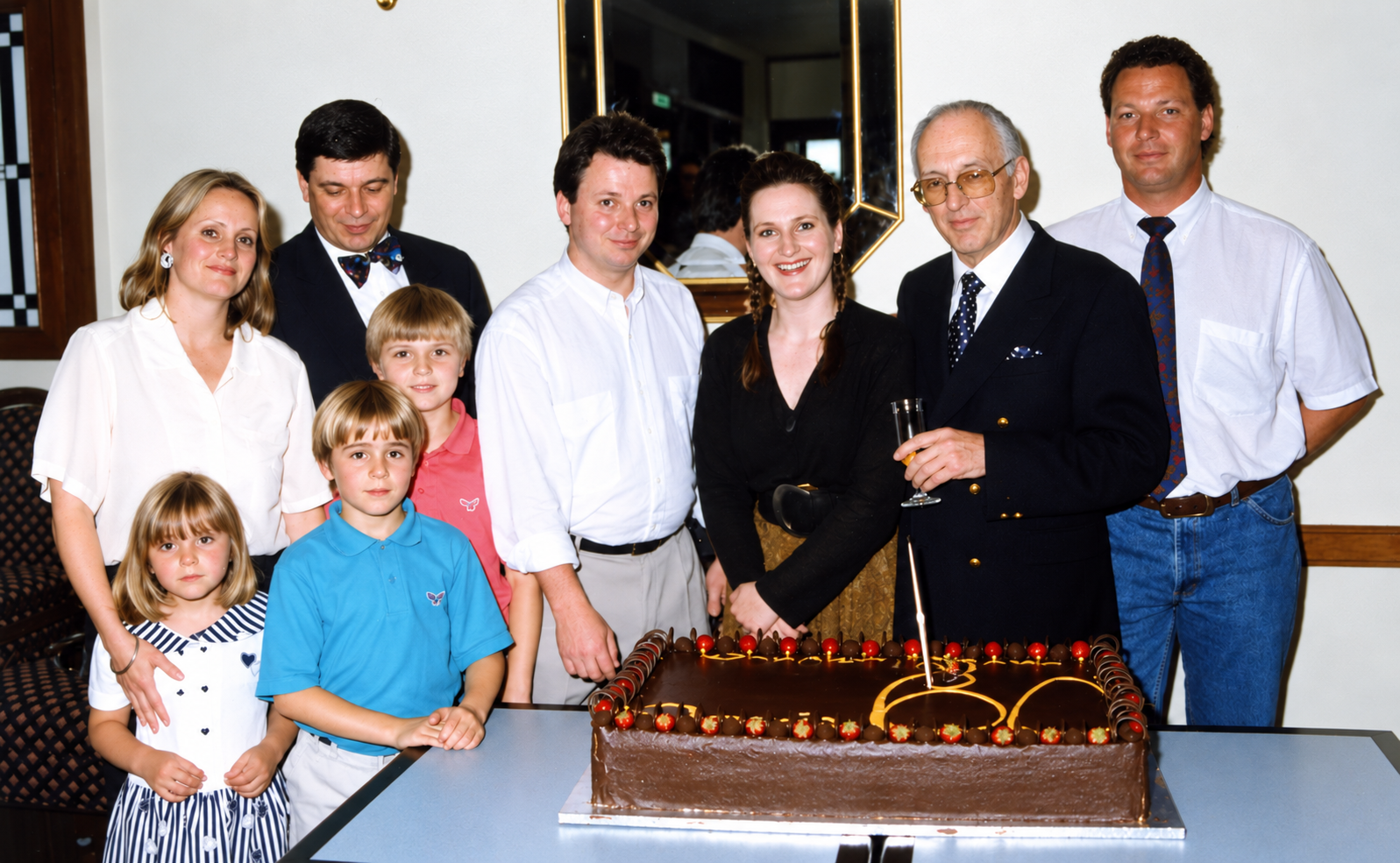
Dad had four children: Tony, my half-brother, then Chris, Randolph and me. I was his only daughter, and I had a particularly close relationship with him.
Whatever our family complexities, that bond was very real.
Online resources
- A life without guarantees – Dennis Gowing – Lawrence Money
- The Londoner – Disco is here to stay – Dennis Gowing
- The Londoner
- Update Your Party with KD The Age 1973
- Epicure-Rita-Gowings is just the same
- Dennis Gowing – Michael Cave – The Age
- MY HOME Dennis Gowing
- Epicure Gowings 1986
- The Gowing Family Legacy

You must be logged in to post a comment.